Facebook Twitter Google RSS
Results for juice Show all posts
Watermelon the wonder fruit

Watermelon the wonder fruit

Keeps you hydrated
Water is vital for survival. So, it is important to keep yourself well-hydrated. While drinking water is essential, eating foods like watermelons can also help to hydrate the body. With more than 90 per cent water content, consuming watermelons will keep the body extremely well-hydrated and detoxed, especially during summer months.
Regulates blood pressure
Proteins like arginine and citrulline are available in watermelon. They that help control blood pressure and regulate blood flow in the body. Potassium in watermelons also helps in maintaining blood pressure levels and reduces hypertension in individuals with obesity.
Improves cardiovascular health
Watermelons are rich in lycopene, a carotenoid phytonutrient that protects the cells of the heart, and improves its performance.
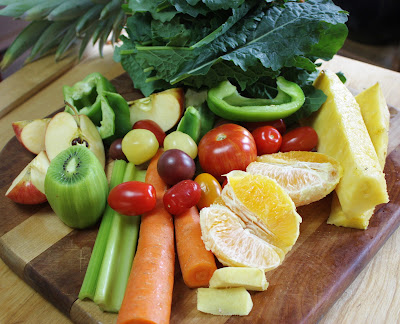
green juice diet weight loss plan

green juice diet weight loss plan

f you don’t know who JJ Smith is, you better ask somebody—perhaps one of the more than 1.2 million folks who keep up with her on social media. Or the hundreds of thousands of people who purchase her weight loss books, which have created a cottage industry for the 47-year old Fredericksburg, Va. native. As the author of two self-published titles and the New York Times best sellers “10-Day Green Smoothie Cleanse” and its recently released follow-up “Green Smoothies for Life,” Smith has become a foremost expert on weight loss and nutrition. green juice
Not too shabby for an Internet technology executive who literally got a new lease on life after encountering her own health crisis. diet
“I was trying to get my life back,” Smith reveals to EBONY.com about the inspiration behind the creation of her health-centered empire. “A few years ago, after years of clean, healthy eating and detoxing, I was bedridden with mercury poisoning from my silver dental fillings. I had high levels of mercury in my brain, gut, liver, and kidneys. I couldn’t get out of bed for months. My health, energy, and motivation were at an all-time low.” weight loss plan
Meditation Weight loss Benefit

Meditation Weight loss Benefit

While a large part of the process does involve eating right and exercising regularly – we forget how important a part our mind can play to help achieve these targets. Weight loss is an internal process as much as it is an external one. And this is where Mediation comes to help. Controlling your thoughts, being aware of yourself, regulating blood flow and heart rate are just some of benefits of meditation.
How Can Meditation Help with Weight Loss

1. Meditation makes you aware of yourself:
We are often running from one meeting to another, trying to wrap up one chore even as the next few creep up on us slowly. Meditation is an ancient practice that does wonders in calming one down. Once you are aware of yourself you are better prepared to face the challenges around you.

2. Tool against binge eating:
Most people put on weight due to binge eating. The reasons for binge eating can be many – from stress to self-esteem issues or pressure at work or home. Binge eating is a vicious cycle where you constantly oscillate between periods of less eating to over-eating. A daily practice of mediation can help reduce stress levels significantly. Once you are less stressed out, you tend to have fewer, and fewer episodes of eating-without-thinking.
thumbnail

less calories diets planned can give you more energy

Weight loss with more food, fewer calories Simply put, energy density is the number of calories (energy) in a specific amount of food. High energy density means that there are a lot of calories in a little food. Low energy density means there are few calories in a lot of food.
When you're striving for weight loss, the goal is to eat low-energy-dense foods. That is, you want to eat a greater volume of food that's lower in calories. This helps you feel fuller on fewer calories. Here's a quick example with raisins and grapes. Raisins have a high energy density -- 1 cup of raisins has about 434 calories. Grapes have a low energy density -- 1 cup of grapes has about 82 calories.
Water. Fruits and vegetables are generally high in water content, which provides volume and weight but not calories. That's why they're low-energy-dense foods. Grapefruit, for example, is about 90 percent water. Half a grapefruit has just 37 calories. Raw, fresh carrots are about 88 percent water. A medium carrot has only about 25 calories. Fiber. High-fiber foods not only provide volume, but also take longer to digest, making you feel full longer on fewer calories. Vegetables, fruits and whole grains all contain fiber. Popcorn is a good example of a high-volume, low-calorie whole grain. One cup of air-popped popcorn has about 30 calories. Fat. Fat is high in energy density. One pat of butter, for example, contains almost the same number of calories as 2 cups of raw broccoli. Foods that contain fat naturally, such as dairy products and various meats, or foods with added fats are higher in calories than are their leaner or lower fat counterparts. Energy density and the food pyramid
Please Stop Juicing Your Vegetables

Please Stop Juicing Your Vegetables

Juicing your veggies is not the same thing as chewing them. You lose nutrients in the juice form and are left feeling hungrier afterward. Not to mention all those juice bar runs can add up and drain you of some serious cash. So all that juicing really just leads to less money and more harm than good for your health goals.
Your body is designed to naturally rid itself of toxins and excess stuff it does not need or use all on its own. If you have a functioning gut, liver, and kidneys, you are always detoxing, every minute of every day.
A huge problem with juicing vegetables and juice cleanses is that proponents claim they restore and rebalance your organs by giving them a break from digesting and discarding the food you take in. But there is zero (I repeat, zero) scientific evidence to support the claim that these organs need a break in the first place.
more likely to break your diet if you do this

more likely to break your diet if you do this

For people trying to lose weight or even maintain a lower body weight, the temptation to overeat is stronger when meals are eaten in a social setting like a friend’s home or restaurant, and when eating alone, according to research presented last week at an American Heart Association’s conference.
The study followed 150 people (90% of whom were women) who used smartphones and a custom-developed app to capture data as dieters moved through their day.
The chance of diet lapse and/or overeating was about 60% when eating in a restaurant and 50% when eating alone, said Lora Burke, the lead author of the study and professor of nursing in the Department of Health & Community Systems at the University of Pittsburgh in Pennsylvania. When asked if they wanted more food or a high-calorie food, the odds of breaking their diet were also 60%. Odds of a diet lapse were lower at work (around 40%) or in a car (30%).
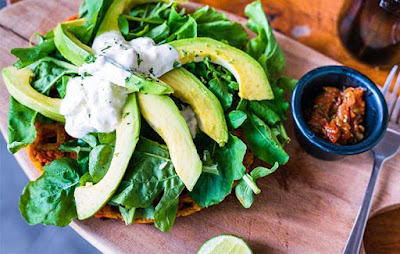
How much avocado is too much

How much avocado is too much

While nothing bad will happen by eating a lot of avocado, keep in mind that the serving size is a lot smaller than you might realise meaning you may be consuming a lot more kJs than you intended to, says Keri Gans, registered nutritionist and author of The Small Change Diet.
The serving size that I don’t think anyone sticks to is one-fifth of a medium-sized avocado, Gans tells Yahoo Health. Most people think you’re supposed to eat the whole thing, like with any fruit.
But consider that an avocado packs around 1,000 kilojoules. So it’s not the same as eating a whole peach, which is 250 kJs. There’s a difference — and if you are watching your weight, you probably don’t want to eat an entire avocado, Gans says.
 
-->